
Mental Health Support for International Students in Australia: A Service Navigation Guide

Why Knowledge of Mental Health Service Navigation Matters for International Students
If you're an international student in Australia, finding the right mental health support can feel overwhelming , especially when you're not sure what's available and at what cost.
This guide walks you through the full services pathway: from free university support to low-cost community options, private counselling, and the answers to the fears that most often stop international students from reaching out for support.
As an ex-international student myself, I've lived this experience firsthand. I've navigated the mental health system as a student, supported friends through it, and now, as a psychologist, I work with people from culturally diverse backgrounds every day.
Here are your options for mental health support if you’re a student in Australia without Medicare:

Free Crisis Helplines (24/7, No Referral Needed)
Before anything else: if you are feeling overwhelmed — especially late at night, on a weekend, or when you're simply not sure who else to call — a crisis helpline can be your first point of contact. No referral, no Medicare card, no visa status check. You just call.
Lifeline — 13 11 14 Available 24 hours a day, 7 days a week. Lifeline supports people who are in crisis or feel at risk of harm to themselves. If calling feels too intimidating, there is also a text option and an online chat available through the Lifeline website. This makes it particularly accessible for international students who may feel more comfortable in written communication, or who are reaching out in the middle of the night when no other service is open. It's free, confidential, and available to anyone in Australia regardless of visa status.
1800RESPECT — 1800 737 732 Also available 24/7. This is the national support line for people experiencing or concerned about relationship violence or family violence. Like Lifeline, it is free and confidential.
One important thing to keep in mind: helplines are an immediate support, not an ongoing one. They are a vital first point of contact in a moment of crisis, but they are not a substitute for regular counselling or ongoing mental health care. Think of them as the safety net that's always there, and then use this guide to find the longer-term support that's right for you.
Free University Counselling Services
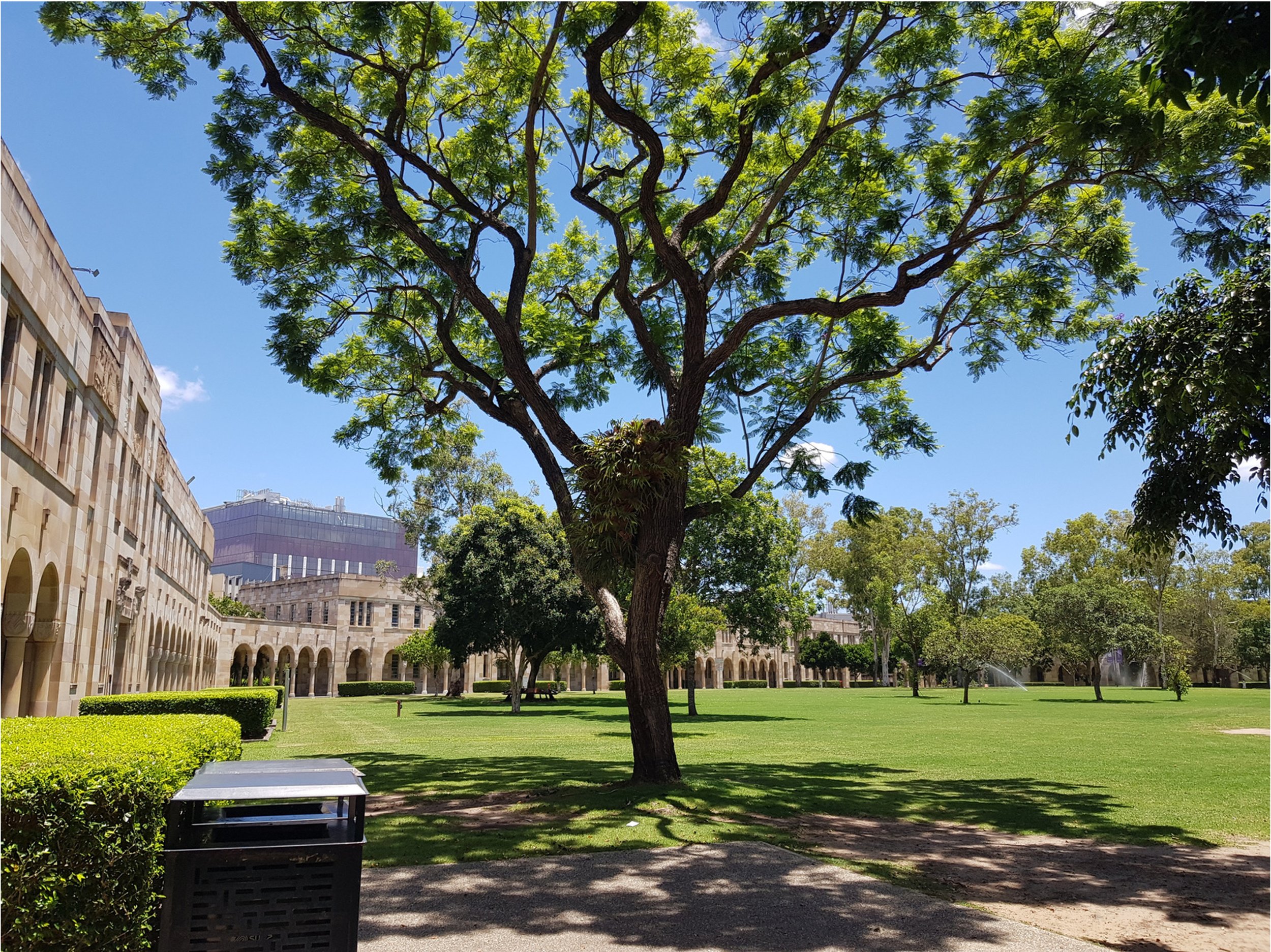
Every Australian university offers a free counselling or wellbeing service for enrolled students. These sessions are free, confidential, and no Medicare is required, which makes them one of the most accessible first steps for international students.
The most important thing to know: book early, don’t wait until you're already in crisis. Waitlists can stretch out significantly during peak periods like exam season.
Group sessions are often available sooner than individual appointments, and they're an underrated option. Connecting with others going through similar experiences can be just as valuable as one-on-one support.

Free Community Support Groups
Support groups are not therapy — but they can be a powerful first step, particularly for international students and third culture kids who find the idea of one-on-one sessions daunting. Hearing someone else describe what you've been feeling, and realising you're not alone, can shift something before you're ready to see a professional.
You can show up and simply listen. There is no pressure to speak. Here are some examples:
MHFA Support Groups run sessions covering anxiety, depression, trauma, OCD, bipolar and more. Visit supportgroup.mhfa.org.au or call 1300 643 287.
ARCVIC runs groups focused on anxiety, body image, and social connection. Sessions are available both in-person in Melbourne and via Zoom, making them accessible wherever you are. Peer-led, free, and confidential. Visit arcvic.org.au.
Low-Cost Counselling Through Student and Community Clinics
A common question about student psychology clinics is: are they actually good? The honest answer is yes — often very good. Student clinicians are highly trained and typically see fewer clients than fully registered psychologists, meaning they have time and energy for each session. Their training is current, and they are closely supervised by experienced practitioners.
Sessions typically cost between free and $50 — compared to $200-$300 or more for a fully registered psychologist without Medicare. For international students without Medicare access, these clinics are one of the most valuable options available.

Private Counselling and Using Your OSHC
For international students who want to see a specific therapist, access bilingual counselling, or need more scheduling flexibility, private counselling is the next option — and your Overseas Student Health Cover (OSHC) may help with the cost.
OSHC is required for all international students in Australia. Think of it as a version of Medicare designed specifically for you. Whether psychology is covered and to what extent depends on the specific policy you have purchased, so it's worth contacting your provider directly to check.
There are two billing models to be aware of:
Direct billing: The clinic bills your insurer directly, and you pay only the gap (the difference between the actual fee and what your insurer covers).
Non-direct billing: You pay the full fee upfront, then claim back from your insurer.
One strong recommendation: find a regular GP early, your university's health clinic may be a good start. A GP who works with international students will understand OSHC and non-Medicare referral pathways, and can help you navigate every step.
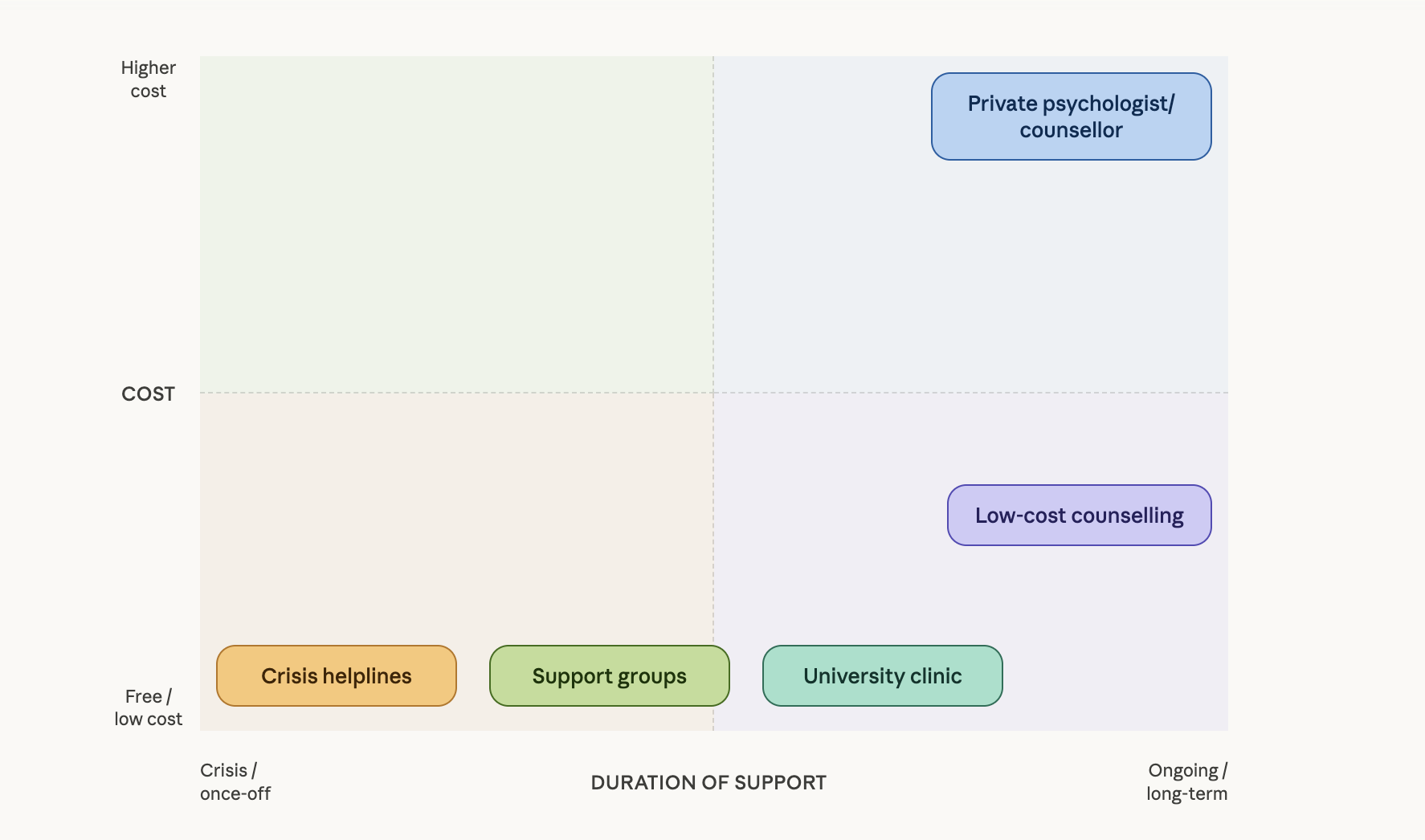
Here is a summary chart about all the options:
It can feel overwhelming but the most important step is the first one. Wherever you are in your journey, whether you're just starting to notice something's off, or you've been carrying something heavy for a long time, it’s important to remember that there is always a pathway towards hope and recovery, and there is support available at every stage.